Music Culture & Cultural Analysis
case studies
Music has always been the way I understand people. It is how I learned to read emotion, memory, and the quiet signals communities send to each other. This section reflects the work I have done to study those patterns, how sound becomes language, how rhythm becomes connection, and how Black musical traditions continue to shape the way we move through digital spaces today. These essays and analyses are part of my ongoing commitment to documenting the cultural intelligence held within our sound.
The Evolution of DJ’ing
Music is the core of my cultural intelligence work. I analyze how sound, digital behavior, and community memory shape the way people move, gather, and create meaning. My work traces the lineage from the Trans Atlantic Slave Trade to the algorithms that shape modern platforms.
A long form cultural analysis that examines how the communicative power of music during the Trans Atlantic Slave Trade shaped the social, emotional, and communal responsibilities DJs carry today.
Role: Cultural Intelligence Analyst and Writer
Impact: Strengthened UDM Archive’s authority in music culture and sparked cross platform engagement around lineage and leadership.

Music as Communal Technology
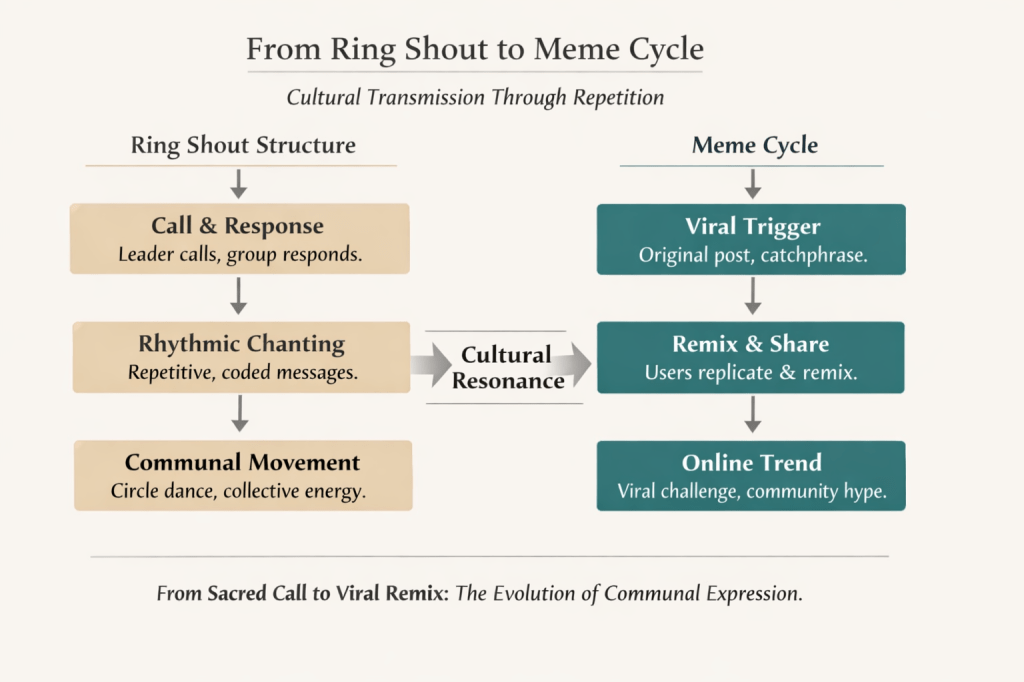
An exploration of how rhythm, call and response, and coded musical systems functioned as early communication networks and how those same patterns appear in modern digital behavior.
Role: Researcher and Cultural Strategist .
Research Question
How do historical Black musical communication systems reappear in today’s digital platforms, and what does that reveal about how communities signal, organize, and respond online?
CORE INSIGHT
Rhythmic repetition, call‑and‑response, and coded musical structures now shape digital behavior on platforms like TikTok, Twitter, and YouTube. These parallels show that “viral” behavior is not new; it is a continuation of communal technologies designed for survival, memory, and connection. Music brings the community together whether it’s mainstream or not.
Below are examples of trends started by UDM Archive which led to communal movement .
Example
Impact
Expanded UDM Archive’s cultural framework by connecting historical communication systems to modern digital signaling, deepening audience understanding of cultural continuity.
TikTok as a Sonic Archive
A cultural analysis of how TikTok preserves, remixes, and redistributes Black musical traditions — often without credit.
Role: Digital Culture Analyst
Research Insight
TikTok functions as an informal sonic archive: a place where Black musical traditions resurface, circulate, and gain new meaning through remix, nostalgia, and collective memory. Sounds that originated decades ago re‑enter the cultural conversation not because platforms preserve them, but because communities do.
Example One — Tender Love and the Power of Communal Recall
When UDM Archive resurfaced the 1985 classic “Tender Love” on TikTok, the clip generated over 3 million views, proving how deeply Black musical memory travels across generations. What made the post take off wasn’t just nostalgia — it was recognition.
In the comments, people immediately connected the song to a single, iconic moment from the early‑2000s Black sitcom One on One. That collective recall transformed the post from a music clip into a cultural memory exchange.
Example Two — Viral Memory Transfer Through Television
After viewers referenced the One on One scene, UDM Archive posted the clip, and it went viral again. This second wave of engagement shows how TikTok users act as cultural archivists: they identify, contextualize, and re‑circulate moments that platforms themselves do not preserve.
This is digital call‑and‑response in real time: the community “calls” by naming the memory, and the archive “responds” by surfacing it.
Impact
Revealed how Black audiences use TikTok as a living archive — preserving songs, scenes, and cultural moments through collective memory, cross‑platform recall, and participatory remix behavior. Strengthened UDM Archive’s authority as a cultural memory‑keeper and digital historian.
The DJ as Cultural Leader
A short‑form essay examining the DJ’s role as emotional architect, community guide, and cultural memory‑keeper.
Role: Writer, Cultural Theorist
Core Insight
DJs are not simply selectors of music — they are cultural leaders who shape emotional landscapes, guide collective energy, and preserve sonic memory across generations. Their mixes, transitions, and sampling choices become forms of storytelling that connect past and present, individual and community, memory and movement.
Example One — Lineage, Influence, and Sonic Inheritance
This mashup was created by a DJ and producer you’ve been listening to since middle school — someone whose sound shaped your early understanding of rhythm, blend, and emotional pacing. That early influence later evolved into multiple collaborations, showing how DJs pass down sonic language the same way cultural leaders pass down stories: through repetition, reinterpretation, and shared creative lineage.
Example Two — Collaborative Cultural Leadership
Your collaboration with this DJ became one of your most recognized mixes, circulating widely and reinforcing the idea that DJs build community not just through performance, but through shared authorship. The blend demonstrates how two sonic perspectives merge into a single emotional narrative — a reminder that DJ culture is inherently communal, dialogic, and intergenerational.
Impact
Reinforced UDM Archive’s authority in music‑driven cultural analysis by illustrating how DJs function as emotional architects and cultural memory‑keepers. Demonstrated how sonic lineage, collaboration, and community response shape modern cultural leadership.
 UDM ARCHIVE