Being a Disc Jockey, a.k.a DJ, is a modern profession that’s only existed a little over 60 years, but the skills required to be prolific at it span across many previous generations, long before (and especially during) slavery. During the Trans-Atlantic Slavery period, the enslaved utilized music as a way to hide and communicate messages in plain sight to prevent outsiders from uncovering important information within the community. The same enslaved individuals who led the hymns during slavery, held a similar leadership position as Choir directors, MCs, Journalists, and DJs because they all influenced a group of people to perform a certain action. Sometimes, the action was simply to be joyous and disassociate from reality by indulging in the song, but oftentimes, it was to invoke a powerful emotion in someone that would collectively change lives from that point forward. The beauty in being a DJ honors those same leadership skills of those who led Negro Spirituals because they both assisted in formulating the identity (and resilience) of our people, all while acting as an archiver of Black history; ensuring that it is never forgotten.
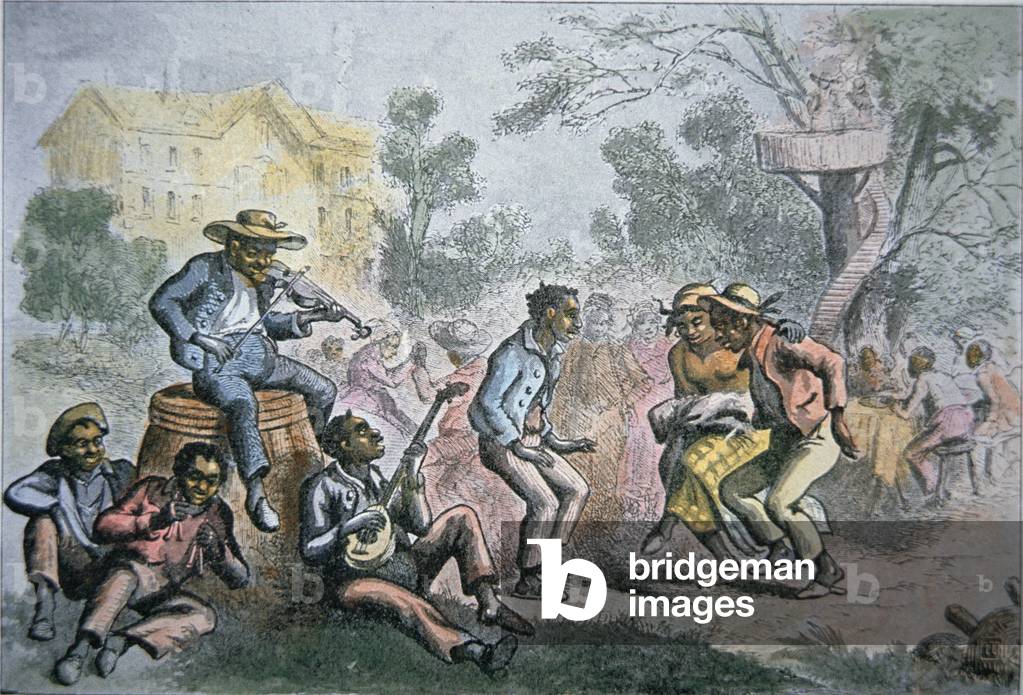
Copyright: Peter Newark American Pictures / Bridgeman Images
The leadership that flows throughout modern DJs originates in the musical traditions of enslaved Africans, whose songs, chants, and spirituals guided, protected, and unified their communities under unimaginable conditions. According to the Library of Congress, “Slaves brought the musical traditions from Africa with them,” which indicates that these musical practices existed for centuries before migrating over to the Americas (African American Song). In the plantation fields, “African Americans accompanied their labor with work songs that often incorporated field hollers– call and response chants tinged with falsetto whoops called ‘arwhoolies’”. These work songs were almost always layered with multiple meanings, permitting enslaved people to communicate with one another without detection from slave owners or overseers.
The documentary Underground Railroad: The William Still Story reinforces this notion when Rev. Velma Maia Thomas mentions that enslaved people often used spirituals with “layered meanings”, and that slaveholders “had no idea” the songs carried coded messages. For example, Reverend Thomas explains the popular spiritual hymn “Wade in the Water” which sounds like a normal gospel song at face value, but it actually instructed slaves that it was time for them to “walk through the water so the dogs can’t pick up their scent,”(The William Still Story).. Some enslaved people would also go as far as hosting “informal gatherings in praise houses and brush arbor meetings” so they can practice and perform songs in secret, “away from the whites”(African American Song). White slave owners attempted to control the way they viewed religion in hopes of keeping “future attacks..” away “..but the bush meetings continued to be practiced even after” forced religion-swapping practices (African American Song). These gatherings often became so spiritually and emotionally charged that “some would enter an ecstatic trance” (African American Song), a phenomenon that directly parallels how modern DJs have the same effect on dance crowds today. DJs are the figures that can collectively guide crowds through various physical and emotional states through the right song selection, repetition, and musical immersion.
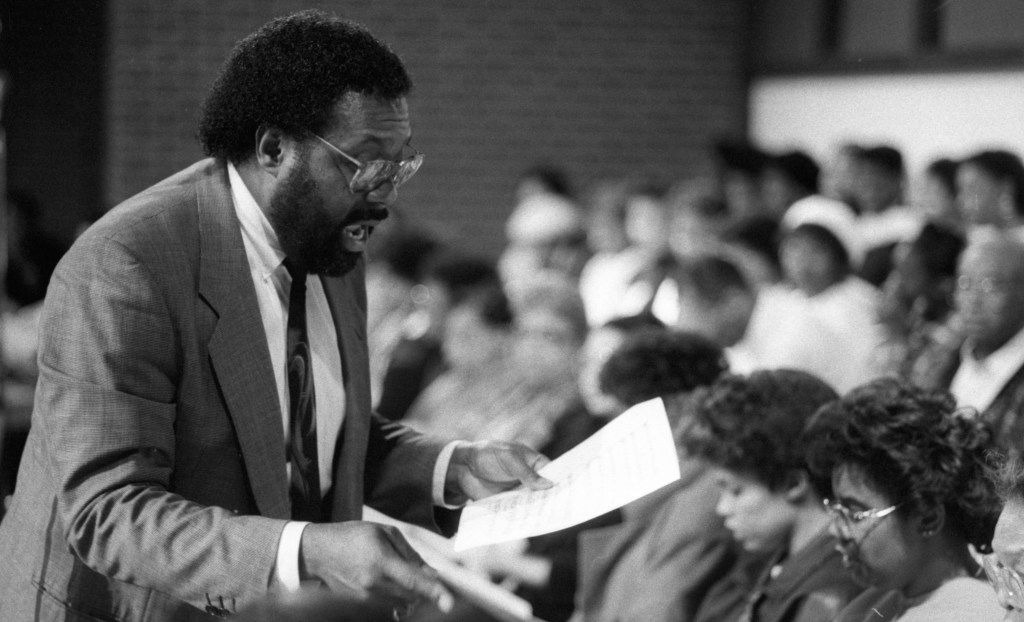
Even before the birth of Hip-Hop, the musical traditions that were prevalent during slavery were still thriving and evolving; especially during the Renaissance, Reconstruction, Jim Crow, and Civil Rights eras. Leadership roles in music went from field hollers in cotton fields to choir directors in Black churches, where gospel music became a central force of cultural expression and spiritual resilience. As Black communities moved north during the Great Migration, their musical traditions (rooted in ring shouts, spirituals, and early gospel) expanded and intertwined with other musical genres such as blues and jazz (African American Song). These genres fostered modernized versions of signature Negro Spiritual styles; call-and-response, improvisation, rhythmic layering, and community participation.
Across juke joints, African American churches, and neighborhood celebrations, Black musicians and overseers (choir directors, hosts, band orchestra directors, etc.) remained a crucial component in guiding communal feeling as well as preserving the rich history of the culture. Their performances and song choices became living archives, carrying forward the emotional, spiritual, and communal practices first forged during slavery. As the Library of Congress explains, these traditions held “layered meanings” that connected generations through shared sound and collective memory (African American Song).
This evolution continued into the mid-20th century with the rise of Motown Records, which “became the first record label to focus on African American artists,” marking a major turning point in Black musical visibility (African American Song). After launching in 1959 as a record label, Motown helped solidify the national presence of Black singers and developed a signature soul sound that blended “gospel, rhythm and blues, and pop influences” (African American Song). The label signed some of the most legendary musicians such as The Miracles, Marvin Gaye, The Temptations, and the Supremes. The label also signed on the incredible “Stevland Hardaway Morris” formally known as “Stevie Wonder,” who recorded his very first record at just eleven years old (African American Song). Motown’s recognition of his power and talent at such a young age reflects how Black musical excellence has never been limited by age, circumstances, or access.
Stevie Wonder being 11 years old in 1961 when he began his professional career also shows how powerful it is to provide child prodigies with adequate support in the music space. Even with his overall success as a musician, many Black youth in impoverished communities still lacked proper resources, especially in musical spaces, which led to them creating new forms of music on their own terms; right in the heart of the Bronx, New York in the late 1970s.
According to Grandmixer DXT, one of the founding Hip Hop DJs of that era, Hip-Hop and DJing as a whole had “..no agenda” and that “It was sheer unadulterated, ‘Let’s do something other than be in a gang’” (Groove Music, 40). The author of Groove Music, a book reflecting on the history of DJ culture,” emphasizes that African American teenagers in impoverished communities simply wanted a way to escape reality as well as create a new one through “indirect resistance by choosing to express one’s power and independence through music,” (Groove Music, 40). The survival strategies embedded in spirituals, work songs, musical guidance, and community protection ultimately evolved into the cultural foundation of the Bronx, New York, where DJs emerged as not only the curators of Hip Hop music, but also as central architects of African American identity, movement, and overall collective experience.
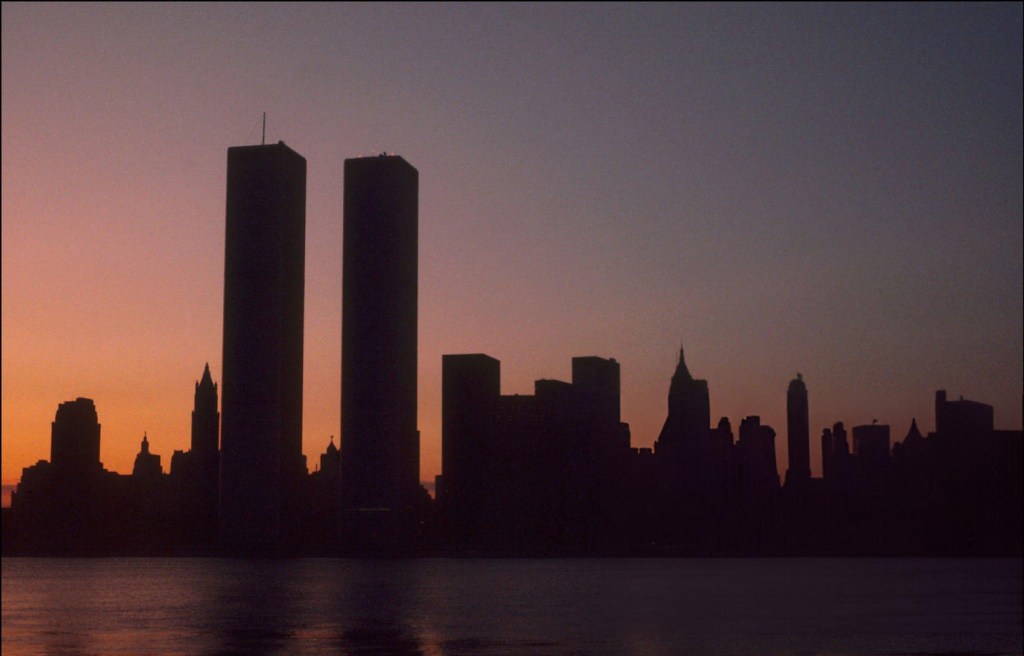
Hip-Hop music and DJ’ing are two incredible musical avenues that flourished in the late 1970s; at the same time the Bronx was experiencing severe economic decline, widespread arson, and rapid disinvestment, along with a host of other living conditions that made life very complicated for its citizens. According to TIME Magazine, the 1977 New York City blackout left “over 2,000 stores looted or damaged”, with the Bronx being at the brink of destruction. TIME also stated that during the 25-hour blackout, “arsonists set more than 1,000 fires and looters smashed their way into some 1,600 stores,” a scale of destruction that deepened the borough’s ongoing crisis. As buildings emptied and services disappeared, the Bronx’s youth found themselves with almost nowhere to go, forcing them to carve out their own spaces for community, creativity, and expression.
With the blackout deepening the Bronx’s crisis, young people increasingly turned to one another to create the cultural spaces the city failed to provide. The destruction of stores and community resources only intensified the challenges Bronx youth already faced, especially when it came to accessing the equipment needed to experiment with music. As Mark Katz explains in Groove Music, “it’s also not the case that DJ-worthy turntables were so easy to come by,” noting that most household record players were “poorly made, fragile, unwieldy, or simply off-limits to children” (64). The lack of resources and available equipment meant that aspiring DJs had to rely on ingenuity rather than availability, often building or modifying their own systems from whatever they could find. Katz describes how early innovators like Grandmaster Flash “went to great trouble to buy, find, modify or make their own sound systems,” even scavenging vacant car lots for any scraps that could be beneficial for system building (64). In a borough marked by abandonment, this resourcefulness became a form of resilience, allowing literal teenagers to transform those usable components into the foundations of a new cultural movement.
What began as a response to scarcity quickly evolved into a creative revolution, led by teen-aged DJs who used their limited tools to craft an entirely new musical language. Their innovations were rooted in not only technical engineering but also in a deep awareness of the culture they were shaping. As Mark Katz notes in Groove Music, GrandWizzard Theodore, widely recognized as one of the founders of DJing, “explained in Doug Pray’s documentary, Scratch, ‘You have to know where hip-hop’s been in order to know where it’s going’” (6). His reflection lays the foundation for how early DJs understood their work as part of a larger historical continuum, even as they were inventing techniques in real time. Katz further emphasizes the DJ’s unique power by noting that “the DJ defies physics, suspending the flow of time by creating an eternal present,” effectively “..forestalling the future, a future which, for those living in difficult conditions, promises little” (36). By blending resourcefulness with cultural intention, these young artists transformed improvised equipment and neighborhood gatherings into the earliest expressions of Hip-Hop’s emerging sound. Those DJs also understood the power of creating those neighborhood gatherings because “Partygoers and passersby who heard – and felt – a sound system from afar were not just hearing music, they were witnessing a raw demonstration of how the DJ’s might and receiving a clear message: you are entering my territory” (39).
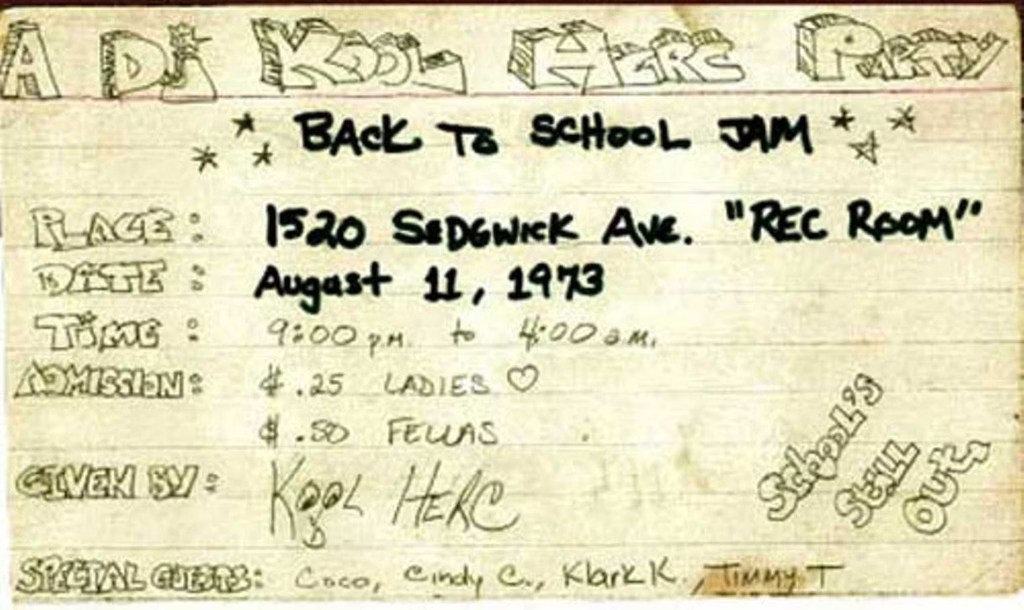
This territorial power became the foundation for the break-centered techniques introduced by DJs such as Kool Herc, whose innovations transformed neighborhood parties into the birthplace that “combined music, dance, and painting,” (Katz, 3) which is where and how Hip-Hop was born. As Katz explains, Hip-Hop’s earliest pioneers were “mobile DJs– they toted their own equipment to every party, whether in apartment buildings or community centers, on playgrounds or in school gyms” (4). This mobility allowed Herc to bring his sound system directly into the heart of Bronx neighborhoods, where he began isolating and extending the percussive breaks that dancers responded to most intensely. These early experiments took place in the “low-ceilinged community room in the basement of his family’s apartment building on 1520 Sedgwick Avenue,” a space formally recognized as “the birthplace of Hip-Hop” (17) music.
Kool Herc and other DJs in the Bronx took inventing new techniques very seriously, because they always wanted a distinct sound from the rest of the community. They were also heavily engaging in many forms of musical gatekeeping that directly echoes the survival strategies of enslaved Africans. Just as enslaved people held “informal gatherings in praise houses and brush arbor meetings.. Away from the whites” to protect their songs, meanings, and communal practices, early DJs protected their musical expertise with equal vigilance. Katz notes that DJs often kept their most valuable records hidden, sometimes “removing the labels on their more obscure records or pasting them over with labels from inferior records” (46). This secrecy was necessary for protection in many ways. For starters, it protected other DJs from poaching their music catalog, and even if you did see the record, it would be mixed in a way that was often hard to duplicate. Katz suggests that “..DJs had to set themselves apart not by what songs they were playing, but by how they were playing them” (50). The same way Negro spirituals carried “layered meanings” that slaveholders “had no idea” about, DJs guarded the breaks, beats, and rhythms that defined their identity, their reputation, and their cultural power.’
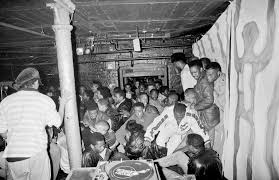
Kool Herc’s manipulation of the break, combined with this inherited tradition of guarding musical knowledge, transformed ordinary community rooms into electrified cultural laboratories. These gatherings, organized and attended largely by teenagers, became spaces where young people could reclaim a sense of power that their environment routinely denied them. As Katz explains, early DJs “generated and wielded a considerable amount of power…denying the typical powerlessness of adolescence, defying the authority of adults, and resisting the poverty, despair, and decay that pervaded the Bronx” (40). Highlighting those points, the birth of Hip-Hop was not only a creative breakthrough but also a continuation of a much older lineage of cultural protection, community leadership, and musical resistance.
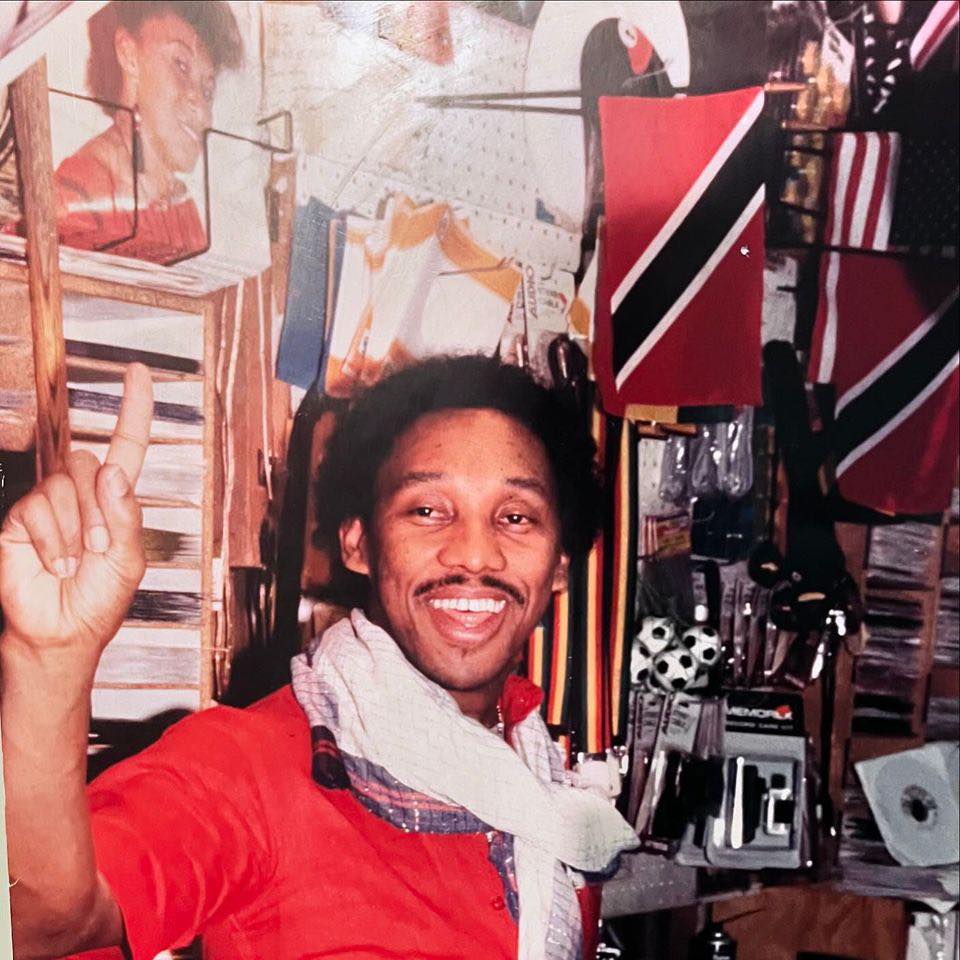
By controlling access to certain records, breaks, and techniques, DJs effectively controlled the cultural space itself, determining who could participate, who could lead, and who could claim authority within the emerging Hip-Hop scene. The intensification of gatekeeping became necessary as DJs not only hid records, but also concealed specific mix sequences and transitions that shaped their sets; musical choices that often carried meanings recognizable only within the Black community. As Katz mentions, many DJs spoke about their work “in terms of concepts and theories,” connecting themselves, consciously or not, to a lineage of Black musical innovation and coded communication (43).
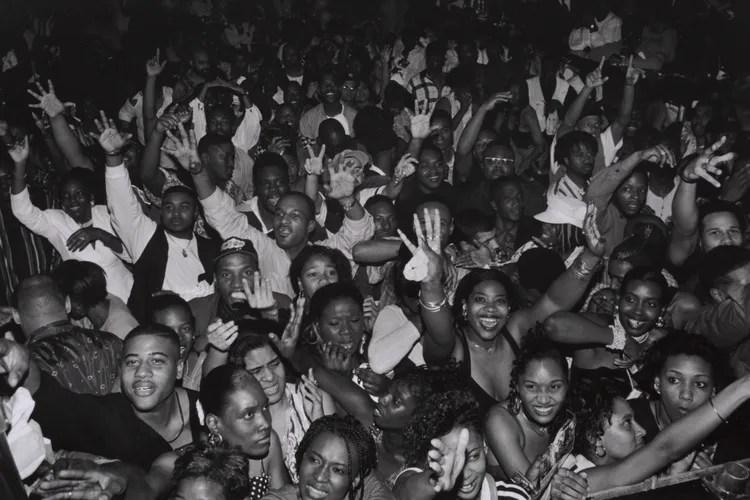
The conscious minds of those young individuals understood the importance of protecting their people, their artistry, and even their specific neighborhoods. Despite Hip-Hop’s efforts to “..embrace the positive as it was to the rejection of the negative”(41), the realities of the Bronx still required DJs to maintain some form of security– not only to keep partygoers safe, but to ensure that their hard-earned equipment was not stolen. Katz explains that this security served another purpose as well (due to internal conflicts within the area): “-They kept the curious from seeing the DJ’s records. At this time DJs kept the identity of their more obscure records a secret, sometimes removing the labels on their most important discs or pasting them over with labels from inferior records,” (Groove Music, 44). Plus, equipment symbolized much more than just an instrument utilized for entertainment. These sound systems were hand-built so complex that passersby could even feel “ ..– a sound system from afar” from those DJs parties, but the DJs also “used their systems to display power and claim territory; their music also sealed partygoers from the din of the city, almost physically separating them from the outside world” (40).
In contemporary DJ culture, these traditions of protection, innovation, and coded musical communication continue to shape how DJs build community, assert authority, and navigate an increasingly globalized music landscape. As stated by Will Vance from Magnetic Magazine, “times have changed, and the digital revolution has ushered in an era where turntables meet technology, blending the nostalgia of vinyl with the endless possibilities of digital DJing”.This shift reflects how modern DJs continue to balance tradition with technological innovation, adapting their craft to new tools while preserving the cultural practices that have defined DJing since its origins.
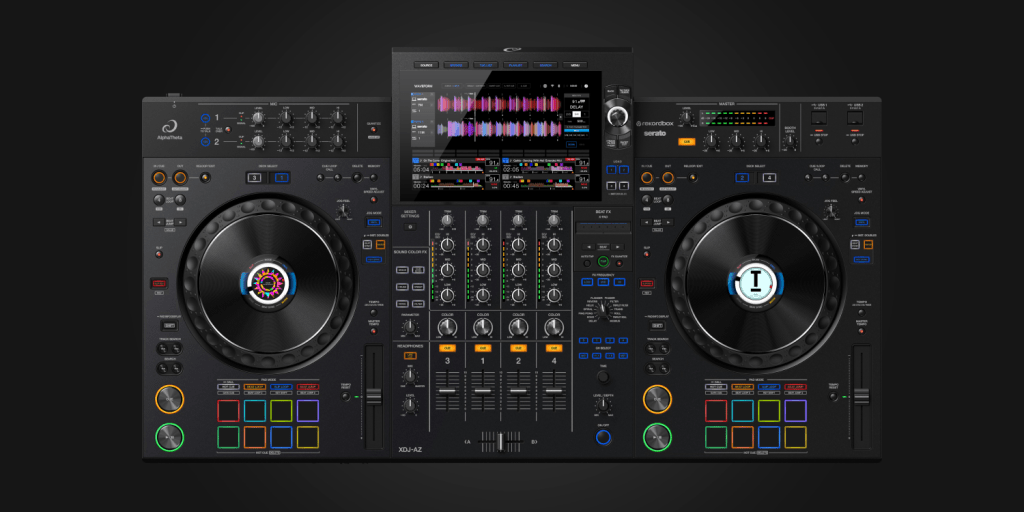
The rise of digital DJ equipment, streaming libraries, and online performance spaces has transformed the craft, but these innovations still operate within the same cultural framework of creativity and guarded expertise that defined early hip-hop. Even though digital streaming prompted access to millions of songs simultaneously, “DJs have become curators and tastemakers”(Vance, TIME), which means that the gatekeeping for catalogs is very much prevalent, even if it seems public. For example, a lot of DJs have chosen to take the digital approach to entertaining a crowd instead of traditional vinyl, which allows them to not only reach people worldwide, but also still have something that’s true to the target audience. Even more so, with the digitization of music, DJs are able to upload their special mixes as songs, further implementing the musician and leadership aspect of Hip-Hop culture. In a way, modern DJing continues to mirror traditions of early hip-hop, proving that new technologies have only expanded (not replaced) the cultural responsibilities that DJs have always carried.

Ultimately, African Americans have endured significant sociological, raciological, and technological changes over the last several centuries, but one theme has remained persistent: the unwavering passion for creative expression that empowers people. From the coded musical traditions of early Black communities to the innovative techniques of Bronx DJs and the digital creativity of today’s musicians reflects a continuous commitment to shaping culture through sound. DJing, in all its forms, stands as a testament to this legacy, proving that while tools and platforms may evolve, the cultural leadership, resilience, and expressive power at the heart of hip-hop (and DJing as a whole) remain unchanged.
Sources:
- “The Blackout: Night of Terror.” TIME, Time, 25 July 1977, time.com/archive/6853056/the-blackout-night-of-terror/.
- Katz, Mark. Groove Music : The Art and Culture of the Hip-Hop DJ. Oxford University Press, 2012, Groove Music : The Art and Culture of the Hip-Hop DJ, https://research.ebsco.com/c/niwdz3/search/details/oamaae22fb?limiters=None&q=groove+music&searchMode=all, Accessed 4 Feb. 2026.
- Thomas, Velma Maia. “Coded Spirituals: KPBS.” Home, 6 Feb. 2012, plus.kpbs.org/show/underground-railroad-william-still-story/video/underground-railroad-william-still-story-coded-spirituals/.
- Vance, Will. “The Future of Digital Djing: Mixing the Past with the Present’s Technology.” Magnetic Magazine, 13 Sept. 2023, magneticmag.com/2023/09/the-future-of-digital-djing/.
- African American Song | Ethnic | Musical Styles | Articles and Essays | The Library of Congress Celebrates the Songs of America | Digital Collections | Library of Congress, http://www.loc.gov/collections/songs-of-america/articles-and-essays/musical-styles/ethnic/african-american-song/. Accessed 22 Mar. 2026.
 UDM ARCHIVE